Monday, December 11, 2017

Machinery Equals/Not Equals to Productivity 2

Continuing from the previous entry, the Husqvarna 430X takes about 22 hours a day, 7 days a week to mow 3/4 acre. It would mow for about 2 and half hours, then recharge for an hour, then mow for 2 and half hours and charge for an hour, cycling continuously rain or shine. The end result is that the lawn would be more lush and always look manicured, and since the clippings are returned to the soil, little application of fertiliser was required. As compared to, I suppose, a rotary mower used twice a month on the lawn, sweeping away the clippings, and perhaps applying fertiliser afterwards. In the shoes of a landscape worker, I would welcome such a widget that needs little to no "supervision" while I could spend more time and attention on pruning shrubs.

I think it was about 5 years ago that CUGE started a programme to rent machinery out to landscape companies in order to encourage them to use more machines or even purchase some of their own after trying the rentals out. Amongst the mechanical wonders were a backhoe, skid-steer + trench digger combo, wood chipper, and get this - a soil potting machine. I don't think the rental programme lasted for 2 years.

 A backhoe that has to be repositioned after digging was done at one spot.

A skid-steer that required the operator to stand. More suitable to dig trenches (on flat ground), as the brand name suggested.

This photo was taken from an area accessible to the public after the rental programme had closed. A soil potting machine out in the open with a tarp draped over it, which was breaking down due to being exposed to the elements.

Slightly more than a year ago, NParks released S$3 million for the Landscape Productivity Grant (LPG) to contribute towards the purchase of machinery by landscape companies and plant nurseries. The grant subsidised half of the machine price, and the Productivity and Innovation Credit (PIC) scheme subsidised 60% of the other half. The company would pay for the remaining, which is 20% of the machine price. NParks reported that a previous tranche of the LPG saw companies achieving the following improvements to their productivity through mechanisation.
- 77% savings in man-hours as a result of using wood chippers
- 60% savings in man-hours after switching to the use of ride-on mowers
- 50% savings in man-hours using tractor-mounted hedge-trimmers
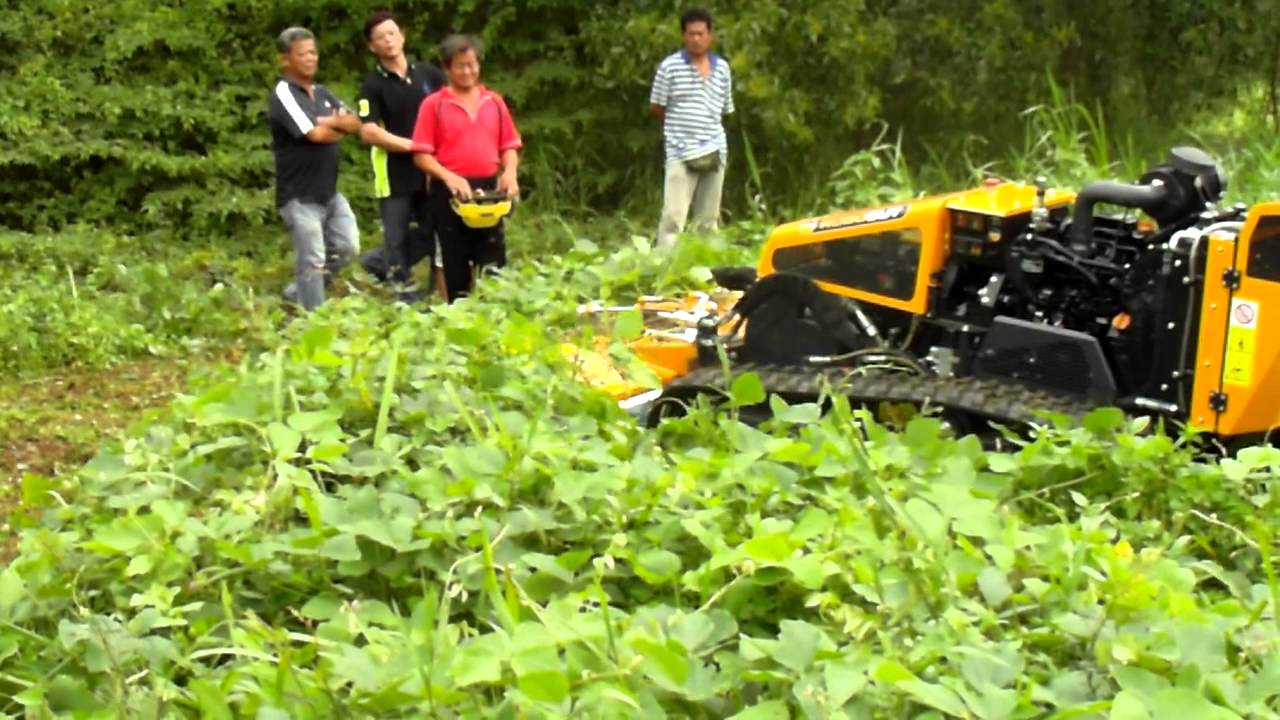
- 80% savings in man-hours as a result of deploying a wireless remote mower

A tractor-mounted hedge-trimmer being utilised along an expressway. Not seen in this photo was the media posse in front of the tractor.

 One whole lane have to be closed just for this machinery to be used. I have not seen this on the roads myself.

 A similar attachment mounted on an Avant loader chasis. This machine was not used in the park ever again after photo taking.

 A stump grinder that I have not seen after taking this photo on Aug 2013.

Do we still have the same amount of productivity improvements despite of all these machines being put out of action? I think the answer would be resounding. The way these "x0% savings in man-hours" was derived is by demarcating a set amount of work - 1 km of shrubs, 1 acre of lawn, 1 lorryload of branches, etc. - and have the machine tackle the work, and have an appropriate number of human workers carry out the same work. The man-hours put into each set of work would be compared against one another. Outside these trials, landscape works were often back to square one. I heard that a company that owned a remote controlled mower used it rarely. When they have hordes of workers using backpack mowers, it was but a logical development. Of course not all landscape work are deprived of mechanisation. For example, in arboriculture.

Other than lifting workers up into the tree crowns and hauling trunks, apparently the crane could be used to grub out stumps. 

UPDATE

 Saw this stump grinder outside CCK Lot 1 on 3 Feb 2018.


Sunday, December 10, 2017

Machinery Equals/Not Equals to Productivity

I was checking out Gebiz as usual in my down time and came across a tender for a "robotic mower", which I thought would be one of these remote controlled mowers featured along with the Landscape Productivity Grant (more on that later). But it turned out to be something less controlled and more automated.

Nah, not this type.

So. Refined.

Here goes the boring Gebiz details:
INVITATION TO QUOTE FOR THE PURCHASE OF A ROBOTIC MOWER UNIT AND THE OPTION TO PURCHASE SPARE PARTS AND ENGAGE TROUBLE-SHOOTING SERVICES

Quotation No.: NPB000ETQ17000133
Agency: National Parks Board

ITEMS TO RESPOND
1. Robotic mower unit
2. Blade
3. OTHER ITEM OF WORK AND/OR SERVICE NOT INCLUDED IN ITEMS ABOVE BUT WHICH ARE NECESSARY FOR THE FULL AND SATISFACTORY COMPLETION OF THE WORKS.
4. OPTIONAL ITEM - Supply and replacement of Battery, Rechargeable (12 months warranty against manufacturer's defect upon acceptance of item).
5. OPTIONAL ITEM - Supply and replacement of Sealing Strip (for control panel) or equivalent.
6. OPTIONAL ITEM - Supply and replacement of Sealing Strip (for main unit body) or equivalent.
7. OPTIONAL ITEM - Supply and replacement of Wheel Snap Function (for wheel) or equivalent.
8. OPTIONAL ITEM - Supply and replacement of Motor Assy or equivalent (at least 3 months warranty against manufacturer's defect upon acceptance of item).
9. OPTIONAL ITEM - Supply and replacement of Motor Assy Height Motor or equivalent (at least 3 months warranty against manufacturer's defect upon acceptance of item).
10. OPTIONAL ITEM - Supply and replacement of Joystick Kit Rear or equivalent.
11. OPTIONAL ITEM - Supply and replacement of Joystick Kit Rear ( for column kit ) or equivalent.
12. OPTIONAL ITEM - Supply and replacement of Motor Kit Drive Wheel or equivalent (at least 3 months warranty against manufacturer's defect upon acceptance of item).
13. OPTIONAL ITEM - Transportation & on-site inspection/service charge (Per trip).
14. OTHER ITEM OF WORK AND/OR SERVICE NOT INCLUDED IN ITEMS ABOVE BUT WHICH ARE NECESSARY FOR THE FULL AND SATISFACTORY COMPLETION OF THE WORKS.

[Edit: Seemed like items 3 and 14 are repeated. Below are the excerpts of the response of two companies that participated in the ITQ.]

Company A (Awarded)
1. $3980 - HUSQVARNA (SWEDEN) AUTOMOWER - MODEL 430X (PN 967 62 25-03)
GPS Assisted Navigation/ 0.8 Acre Working Area Capacity
2. $71.55 - Husqvarna Automower Blades
3. $1500 - Installation Package includes 2 x complimentary follow-up service/loop wire reset with 3 months from installation
4. $214.50 - Husqvarna Automower 430X Replacement Li-Ion Battery
14. $1105.30 - Additional Automower Ad-Hoc Replacement / Service Parts & Accessories

Company B
1. $7500 - Robotic mower unit
2. $2160 - Blade
3. $4500 - Labour $1500 Wire Laying/ Trenching / Material $4500
4. $850 - Replacement battery
14. $1500 - Labour

The awardee was a lot more competitive in pricing as compared to the latter, and even so they could have profited quite a bit.

This bundle, costing approx SGD 2900, includes an install kit that comes with guide wires (250 metres), which sets the boundary for the robot mower (see below).

 The yellow line around the property represents the guide wires that tells the robot mower not to go past. The dotted lines are its mowing path I suppose.

The guide wires were installed a few inches below ground, so I have no idea why the second tenderer have to go and cost in $1500 for laying it and $4500 in materials (which I guess are the guide wires and staples). Assuming the lawn that this mower was used on was exactly 0.8 acres (3237.5m2), and the guide wires were laid just around the boundary, then only 227.6m of it was needed. The install kit comes with slightly more than that length of guide wires.

Sunday, October 22, 2017

No Country for Old (and Young) Trees

Perhaps in view of the incidences of large trees, especially Khaya sp. (African mahogany) falling down and causing loss of lives and damage in property, they have been felled in large numbers. Well except in the case below, that tree has been "halved".


The Rain tree (Samanea saman... or as the rest of the world know it by Albizia saman) that used to be in that spot used to be as large as the one in the background. I suppose defects on the tree called for it to be removed, and it was replaced by this young Rain tree. But it did not last long, possibly broke in half by strong wind travelling through that "wind tunnel". Its root ball was dug up, and the hole was left uncovered.

Photo on the left mentioned in this post: http://openplants.blogspot.sg/2017/04/arboriculture-happenings-at-bugis-area.html

 A replacement tree of the replacement tree seen on 23 Oct 2017.

Saturday, October 7, 2017

Papers Excerpt - Strength Loss Due To Decay

Journal of Arboriculture 18 (4): July 1992
Determining Strength Loss from Decay by E. Thomas Smiley and Bruce R. Fraedrich

SL% = d^4/D^4 x 100 ;Originally developed by engineers to compare the strength of pipes.
SL% = d^3/D^3 x 100 ;Wagener modified it to take into account the irregularity of  trees.

SL% =     d^3 + R(D^3-d^3) x 100
               -------------------------------
                              D^3
SL = Strength loss
d = Diameter of hollow and/or nonstructurally sound wood
D = Diameter of sound wood
R = Ratio of cavity opening to stem circumference

The R(D^3-d^3) modification was developed by the Bartlett Tree Research Laboratories to account for wood which is "missing" at a cavity opening.

Among trees that broke from internal decay, average strength loss was 33% with a SD of 22% [could be between 11% and 44%].

Severity of decay in the trunk predisposes trees to failure [felling, breaking into half, etc.]. Other factors include crown density, branching structure, leaning, location of decay (e.g., in crotches), site exposure, storm severity, [and might I include inherant wood strength]. A lower threshold (20-25%) may be used for trees that are more predisposed.


Journal of Arboriculture 27(2): March 2001
Comparing Formulae that Assess Strength Loss Due to Decay in Trees by Brian Kane, Dennis Ryan, and David V. Bloniarz 


Saturday, September 23, 2017

Gebiz Spiral Watch

Quotation No.: HDB000ETQ17000230 (Housing and Development Board)

QUOTATION FOR ISA CERTIFIED ARBORIST CONSULTANCY SERVICES AT DEMOLITION OF EXISTING PUBLIC HOUSING ESTATES (BATCH 9) AT BLOCKS 30 TO 32 & 34 TO 39, EXISTING SURFACE CARPARK CLAR6 AND ANCILLARY STRUCTURES AT DOVER ROAD

Company A - $29,990
Company B - $5,000 (Awarded)
Company C - $250,000
Company D - $5,000

Lowest bids are 83.3% lesser than second lowest bid.
Highest bid is 50 times (5000%) more than lowest bids.


Quotation No.: HDB000ETQ17000332 (Housing and Development Board)

QUOTATION FOR ISA CERTIFIED ARBORIST FOR CONSULTANCY SERVICES, SURVEYING & RECOMMENDATION FOR NPARKS SUBMISSION FOR THE PROPOSED PUBLIC HOUSING DEVELOPMENT AT CHOA CHU KANG N1C16

Company A - $4,200
Company B - $2,900
Company C - $1,500 (Awarded)

Lowest bid is 64% lesser than highest bid.


Quotation No.: JTC000ETQ17000074 (Jurong Town Corporation)

Provision of Certified Arborist for Tree Species Identification, Value and Risk Assessment Services

Company A - $28,000
Company B - $27.50
Company C - $12,000
Company D - $55,640,000
Company E - $35,000
Company F - $13,800 (Awarded)

 Quantity is 1000 nos... maybe the confusion over the quantity lead to some strange quotes here.
After adjustment, Company B's figure may be $27,500 and Company D's figure may be $55,640. Either way, Company F's figure was the second lowest of all, and was awarded the work. The lowest was Company C.

Friday, September 1, 2017

Resistograph or sometimes known as Resistance Drilling Device

On Jul 2013, two Tembusu trees were observed to be not doing well and to be clear, these tree are not in the Singapore Botanic Garden. The trees have low density of foliage, and the ground within the dripline was compacted, as evidenced by absence of groundcover. Target is the carpark and cars that were parked there, occasional park visitors.

Crown area and trunk of the two Tembusu trees.

On Sep 2013, vertical mulching was done to break up the hardpan surface and to pour in used coffee grinds (organic matter) and NPK 15-15-15 (fertiliser).

Making vertical holes.

Overall view of the vertical holes filled with organic matter and fertiliser.

On Oct 2013, the tree on the left was observed to be still low in leaf density but the tree on the right had put out more leaves.

On Jan 2014, the pruning was done by the arboriculture contractor to remove dead branches.

On the same day, I was inspecting the work of the arboriculture contractor and also found that there is a possible cavity below the union of the tree (the tree on the left).

The extent of decay below the union, if any, was needed to be determined in order to ascertain whether the tree is safe. The depression may just be a natural pocket formed by V-shaped point of union. Hence, a request was sent out for quotations from arborists with resistograph or Resistance Drilling Device. The scope of work was of course to have the resistograph work done, first level tree assessment before that, and reports for both. The works were to be carried out at ground level, and three arborists came up with fees of $1800, $1500 and $1100, respectively.

A "Resi" or Resistance Drilling Device that is used to detect cavities in wood, which is a sign of decay. The company that manufactures this particular device, IML, could not use Resistograph to describe its device in some jurisdictions as the term was trademarked by another company, Rinntech.

The resistograph work was done on Feb 2014 and should be done again in 2 years to see if there is spread of the decay, if any.

The Curious Incident of the Tembusu Tree that Fell

On 17 Jul 2017, two independent arborists testified at a Coroner’s Inquiry on the death of Radhika Angara, a mother of two who was killed when a Tembusu tree fell on her at Singapore Botanic Garden.

One of the expert witnesses, Derek Yap, an arborist with Camphora said that the tree had "no visible signs of crack and cavities", based on his inspection after the tree fell and information preceeding the incident. In addition, he said that "about 70 per cent of the tree trunk at its 2m point was decayed". That extent of decay would significantly reduce the structural condition of the tree but the decay could not be observed from the outside of the tree.

A news article was published yesterday with the headline of "NParks disputes arborists’ diagnosis on tembusu tree in fatal incident" (Today Online, 31 Aug 2017).

A National Parks Board (NParks) representative, deputy director Elango Velautham, testified on 30 Aug 2017 that a 1.5m long "cavity" found during an inspection done on Sep 2016 was actually a "flute" (see definition below) This statement raises three points to be noted:
1. The inspection done on Sep 2016 was by NParks officers.
2. One of the independent arborist said that the tree had "no visible signs of crack and cavities" in his testimony on 17 Jul 2017.
3. It was not known whether the misdiagnosis was discovered before or after the tree fell.

Definition of a "flute".

An example of "flutes" - the grooves between buttress roots below the feet of the arborist on the tree. Photo credit: Today Online

The news article suggested that Elango's testimony contrasted with that of the two independent arborists. But could it be that his testimony actually supported the two independent arborists'?

Elango said that NParks arborists have written a statement to note that the flute was "wrongly perceived as a cavity" as a follow-up to the Sep 2016 inspection report. But it was not known whether the misdiagnosis was discovered before or after the tree fell.

The lawyer acting for Angara's family had questioned "the absence of documentary proof showing how the misdiagnosis was determined", as the written statement was not produced in court on 31 Aug 2017. If signs of decay (cavity) was observed from visual tree assessments, both independent arborists "agreed that further tests such as resistograph and ultrasound could be used to detect decay".

Bonus Curious Point

Arborist Derek Yap agreed that the roots might have been cut and leading to possible decay but another arborist, Richard Gordon Thomas from ArborCulture, said it was not clear that root had been cut. However, another news article - "Tembusu tree accident: Botanic Gardens official says there was 'no decay, no cavity'" (Channel NewsAsia, 30 Aug 2017) - mentioned that both arborists "agreed that the tree’s roots were in decay".

Bonus Bonus Curious Points

That same news article mentioned above wrote that Elango described a flute to be a “protruding structure” on a tree’s trunk formed in response to “environmental exertions” to the tree. Could it be that the journalist who wrote that or Elango confuse a flute with buttress roots?

Elango added that a Temusu tree is "very slow growing", and decays would "take a very long time to … destabilise a tree". Does he mean to suggest that the spread of decay is in pace with the growth of wood? 

The structural stability of the tree would be impacted if the decay was extensive enough, in spite of the wood strength.

References
1. Tembusu tree that killed woman had no visible signs of decay, Today Online, 18 Jul 2017
2. NParks disputes arborists’ diagnosis on tembusu tree in fatal incident, Today Online, 31 Aug 2017
3. Tembusu tree accident: Botanic Gardens official says there was 'no decay, no cavity', Channel NewsAsia, 30 Aug 2017