Monday, August 25, 2025

Polyphenols

LEACHATE FROM LEAVES

When it rains, the concrete ground under Eucalyptus trees has a stain, which are amino acids and organic acids leached from tree leaves. In addition, sugars such as sucrose and glucose are leached and feeds microflora and fauna, and add to soil carbohydrate and organic matter. The sugars also feed symbiotic mycorrhizal fungi (which in turn feeds the tree with water and nutrients) and saprophytic fungi.


POLYPHENOLS

Polyphenols are also leached from leaves, and they are also the Wall 4 or chemical barrier of the compartmentalisation of decay in trees (CODIT) model promoted by Alex Shigo (1986). Polyphenols are made up of multiples of a phenol molecule, which is a hydroxyl (OH) group attached to a carbon aromatic ring, or C6H5OH (or C6H6O). There are four major groups of polyphenols - lignans, stilbenes, phenolic acids and flavonoids. 


LIGNANS

Lignans are found in many plant tissues and seeds and act as antifeedants, in order to deter animals from eating plants. They are understood to have an impact on human diets.


STILBENES

Stilbenes act as phytoalexins (plant defending chemicals) that shields plants from attack, especially by fungi. They are the Wall 4 or chemical barrier of CODIT. They may be allelopathic and such leachates are present in tree species such as Acacia, Eucalyptus and Pinus. Allelopathic leachates restrict the growth of weeds and other plants, and reduce seed germination until conditions become favourable. Leaf litter are often present for allelopathic effect to take place but not always. 


PHENOLIC ACIDS

Naturally occuring phenolic acids in plants are caffeic, vanillic, coumaric, ferulic, gallic, sinapic and, salicyclic acids, amongst others. They act in several roles in plant biology and metabolism where they are antioxidants, and they are found in teas, beers, wines, grains and other products. Salicyclic acid is known as aspirin. Phenoxy acids and polyphenols has antioxidant and anti-inflammatory roles in human health. They contribute to the defence of plants in the CODIT model. They can also bind nutrients that are important for human health.


FLAVONOIDS

Flavonoids could be anthocyanins that provide colour to flower petals, prevent UV light damage to tissues, help nodule formation, and protect plants against diseases (Stiller et al. 2021). They could also be tannins, which are water soluble, astringent tasting, and bind proteins and amino acids. Tannins add taste to chocolate, in teas and coffee, and add flavour of red wines. Tannins in oak barrels enhance the flavour of wines contained within them. They can be allelopathic and a high concentration discourage grazing by mammals and insects.


ABSCISSION ZONES

Some of the many aspects of plant metabolisms that involves polyphenols are leaf abscission and abscission zones. Polyphenols are found in the leaf abscission layer (Figure 1) and when the leaf is shed, that layer become oxidised and become antibiotic when exposed to air. This is a function of Wall 4 or the chemical barrier in the CODIT model (Morris et al. 2019). The risk of infection is reduced at the shedding site by antibiotics. There could also be a thin layer of dead plant cells at abscission zones after shedding to further protection from pathogens. Pruning should not be done past abscission zones, so as not to reduce the polyphenols present and leave tree wounds susceptible to disease and decay. Polyphenols are present in the tissues on the adaxial (upper) side of a branch and are present under the epidermal cell layers at branch unions and nodal positions. These are the parts that are vulnerable to insect and fungi attack.


Figure 1. Deposition of polyphenols at leaf abscission zone. Not the polyphenols (dark stained regions) in the abscission layer, but also those under the epidermal (bark) layer and on the adaxial (upper) side of the petiole's point of attachment to the twig.

Phytoalexins are antimicrobial chemicals that plants produce de novo (from scratch) in response to pathogen infection. Stilbenes are sometimes activated in order to target a particular species of fungus.


ALLELOPATHY

A concentration of polyphenol restricts the germination of seeds and plant growth under trees that leaches them. Alleopathic effects may be overlooked due to environmental factors such as drier soil above tree roots and shading of light. River red gums (Eucalyptus camaldulensis) reduce vegetation under their canopy by polyphenols in an arid environment, but heavy rainfall or floods would leach out or dilute water-soluble polyphenols from the soil. That would in turn allow germination and growth of seedlings, as well as weed proliferation. 

In parks and gardens, the space under trees may be utilised to grow other plants but polyphenols such as stilbenes in the soil may restrict that. Leaf litter could be removed from under the trees regularly, and leach out polyphenols from the soil using irrigation, since they are water soluble.


COLOURS OF POLYPHENOLS

Timbers that contain polyphenols that contribute to their durability and colour, which vary from almost black through brown to orange or cream. Tannins in the timber could be leach after exposure to weather and decay. 

Spotted gums (Corymbia maculata) and other tree species may leach tannins from leaves, and fallen leaves may leave imprints on concrete paths and timber decking. Surfaces could also be stained by bits of timber with high tannin content. Tannins could be washed by vehicle exteriors and other non-porous surfaces quite easily but for porous surfaces, high-pressure spray may be required. A heavy-duty chlorine solution may be an effective cleanser.


Original article

1. G.M. Moore. 2025. You Eat Them, You Drink Them, They Can Stain Concrete, but They are Great for Trees!, Arborist News Aug 2025

References

2. Morris H, Hietala AM, Jansen S, Ribera J, Rosner S, Salmeia KA, Schwarze FWMR. 2019. Using the CODIT model to explain secondary metabolites of xylems in defence systems of temperate trees against decay fungi. Annals of Botany. 125(5):701-720. https://doi.org/10.1093/aob/mcz138

3. Shigo A. 1986. A new tree biology. Durham (NC, USA): Shigo and Trees, Associates. 595 p.

4. Stiller A, Garrison K, Gurdyumov K, Kenner J, Yasmin F, Yates P, Song BH. 2021. From fighting critters to saving lives: Polyphenols in plant defense and human health. International Journal of Molecular Science. 22(16):8995. https://doi.org/10.3390/ijms22168995

5. Teka T, Zhang L, Ge X, Li Y, Han L, Yan X. 2022. Stilbenes: Source plants, chemistry, biosynthesis, pharmacology, application and problems related to their clinical Application - A comprehensive review. Phytochemistry. 197:113128. https://doi.org/10.1016/j.phytochem.2022.113128

Wednesday, July 2, 2025

Climate Change and Trees

Trees provide shade and shield against heat in the urban environment, and healthy trees are a necessary part of the infrastructure. While some arborists does not partake in the planning and planting of trees, there should be awareness on climate-ready trees that are adapted for a warmer and stormier world. In this article, "climate analogs" are defined as areas elsewhere that currently have climate conditions, which a specific location is projected to have in the future. The article's author mentioned that this article was a supplement to a earlier article (Planning for Climate-Ready Tree Species: What Next?, Daniel C. Staley, Arborist News June 2023).

Not all woody plants currently present in an area can tolerate future climate conditions (Fitzpatrick and Dunn 2019; Tian et al. 2023; Sjöman et al. 2024).

There are a few scenarios that the climate is predicted to become. Climate analog tools such as FitzLab and Copernicus were mentioned, and FitzLab was explored for the article. 

Climate analog tools uses global climate models, which in turn uses climate change scenarios, in order to give model outputs that are widely used as a standard tool for decision-making (Schmolke et al. 2010). There are a few climate change scenario temperature projections from now till year 2100, depending on how humans could change their practices. Tree species composition and health would change, if temperatures were to reach the top three scenario trajectories.

A pessimistic scenario sees more industrial activities, fossil-fuel use and deforestation, and a less pessimistic scenario sees a shift to renewable energy, less deforestation and reforestation to be less warming to the world. An official narrative from the Intergovernmental Panel on Climate Change (IPCC) describes different societal actions leading to a few scenarios, from which to choose and use climate analog tools to find areas with climate-ready trees. 

- SSP5_8.5: Increased energy use, deforestation and emissions, which results in about 4.4 degrees C projected temperature rise by 2100

- SSP3_7.0: 'Business As Usual', results in about 3.6 degrees C projected temperature rise by 2100

- SSP2_4.5: Some reduction in fossil-fuel use, slowing of deforestation and reduction in emissions, results in about 2.7 degrees C projected temperature rise by 2100

- SSP1_2.6: Significant reduction of fossil-fuel use, and sustainable development, results in about 1.8 degrees C projected temperature rise by 2100

The article suggested to choose a scenario or scenarios that nearby governments/institutions are using but if there are no such planning done by nearby governments/institutions, then choose a scenario and alternative scenario (for comparison), and provide clear justification on why they were chosen. Explanation of scenario narratives and pathways are in Hausfather 2018.

Samples of climate analog tool inquiry using FitzLab tool (FitzLab 2025):

San Jose, California -> (in year 2080) Redlands, California

Würzburg, Germany -> (in year 2080) Villa Fontana, Emilia-Romagna, Italy

However, climate analog tools does not take into consideration site factors such as shade, aspect, exposure to coastal winds, heavy snow. 

Native woody plants in a project area today may not be suitable 60 years or 80 years later. Plants that are adapted to future conditions should be considered, which are not currently native. These plant species could be introduced to meet the requirement of future urban environments.


References

1. Dan Staley. 2025. How to Find Climate-Ready Trees for your Project, Arborist News Apr 2025

2. FitzLab 2025. Climate analog tool [online tool]. https://fitzlab.shinyapps.io/cityapp

3. Fitzpatrick MC, Dunn RR, 2019/ Contemporary climatic analogs for 540 North American urban areas in the late 21st century. Nature Communications. 10:614, https://doi.org/10.1038/s41467-019-08540-3

4. Hausfather Z, 2018 April 19. Explainer: How 'shared socioeconomic pathways' explore future climate change/ London (United Kingdom): Carbon Brief. https://www.carbonbrief.org/explainer-how-shared-socioeconomic-pathways-explore-future-climate-change

5. Schmolke A, Thorbek P, DeAngelis DL, Grimm V. 2010. Ecological models supporting environmental decision making: A strategy for the future. Trends in Ecology & Evolution. 25(8):479-486. https://doi.org/10.1016/j.tree/2010/05/001

6. Sjöman H, Watkins H, Kelly LJ, Hirons A, Kainulainen K, Martin KWE, Antonelli A. 2024. Resilient trees for urban environments: The importance of intraspecific variation. Plants, People, Planet. 6(6):1180-1189. https:/doi.org/10.1002/ppp3.10518

7. Tian P, Liu Y, Ou J. 2023. Meta-analysis of the impact of future climate change on the area of woody plant habitats in China. Frontier in Plant Science. 14:1139739. https://doi.org/10.3389/fpls.2023.1139739 


---

In Arborist News June 2024, page 71, 72, of an interview article with an arborist in Australia, Rebecca Barnes made mention of Dr. Dave Kendal, who works with tree species analysis for projected climates. Furthermore she expressed concern that climate change is a challenge in her country for the future. "Many of the native tree species in Australia have specific and niche environments. Unusual changes in temperature and rainfall are affecting these environments, which leads to tree decline, which, in turn, leads to pests and diseases and also leads to areas that are more prone to bushfire."

Dr. Kendal is one of the members who carried out an assessment of the risk from climate change for living collections and landscape at Melbourne Gardens, which is commissioned by the Royal Botanic Gardens Victoria. By year 2070 and assuming 'business as usual emissions', under an extreme climate future, temperatures are forecast to increase by 3 degrees C. The assessment identified areas that required "management intervention such as procuring new species, succession replanting or improving site conditions". The project also resulted in the development of a decision support tool to enable managers to run their own assessments of climate risk for new plant introductions.

Reference: Assessment of Climate Change Risk to Living Plant Collections, https://www.rbg.vic.gov.au/initiatives/landscape-succession-strategy/assessment/

Saturday, April 19, 2025

Foliage with Angular Spots

Dendro and and his assistant Codit were asked to visited a wedding venue to examine defoliating Viburnum suspensum. They met its grounds manager, Amelia. Several of those shrubs are near a gazebo, and she expected that the background should be green and suitable for wedding photos. Since last year, there was defoliation and leaf spotting on one shrub, and that spread to others. Their landscape contractors assumed it was a leaf spot disease and sprayed a fungicide three times for one year, but there was no improvement. In the middle of their conversation, the pop-up sprinklers activated and sprayed water onto their pants and shoes. Amelia apologised, as the irrigation should have been turned off during the meeting, but Dendro and Codit commented that cultural conditions are important. Upon further questioning, Amelia shared that the shrub bed is irrigated every other day, and long enough to soak the grass and mulch. Dendro replied that foliar pathogens are spread and supported by excessive moisture.

Codit examined the leaves on the ground and noticed that the spots on them are angular. "Fungal leaf spots are often medium to dark brown and more rounded, while bacterial spots are generally dark brown with a yellow halo", he explained further, "angular leaf spots are less common". Foliar nematodes and plant pathogenic bacteria can cause angular leaf spots. Dedro recommended sending samples to plant diagnostic laboratories to know for sure the pest and disease issues, or health problems, in order to be sure. 

Upon inspection on a leaf with a magnifier, Codit spotted grayish fuzz growing on spotted tissue and deduced that the disease is viburnum downy mildew, Peronospora viburni. Downy mildew diseases are caused by oomycetes, which are fungus-like organisms, not true fungi. Diseases caused by oomycete are usually worse when conditions are wet, as they produce spores that swim in water. Phytophthora species is an oomycete that can infect foliage as well, but its often seem on roots, and stem/trunk cankers on woody plants. Downy mildews are often host-specific, so one plant genera is being infected by one species of downy mildew - Viburnum suspensum shrubs in this case.

Amelia connected the dots and realised that the reason why the landscape contractor's fungicide applications were not working was because the disease is not a fungus. Dendro reminded Amelia to send leaf samples to a diagnostic lab, and inform the landscape crew to rake up and dispose of gallen infected leaves regularly. In addition, to turn the sprinklers away from the viburnum foliage so that they are not wetted. Finally, to do scouting so as to catch disease and insect problems early.

Reference: Arborist News, Apr 2025, pages 22, 23, 56, 57

Sunday, July 14, 2024

Observations on the streets and Google Streetview in June

Trenching or excavation was being done very close to trees, presumably right outside the structural root zone of the trees.


One side of the root zone being cut about 0.5m or 0.6m away from trunk.

Trees appear to be well supported on the opposite of the root cut.

At a certain traffic island, wood chip mulching formed a berm around tree base, and away from base of the trunk.


Trees in tree wells along Cluny road were observed to be felled, the wells backfilled and metal grills removed. The tree closest to Gleneagles Hospital was removed somewhere between Jun 2021 and Oct 2021. The trees in tree wells further back were removed somewhere between Mar 2018 and Nov 2020, according to Google Streetview.


Along Cluny Road, trees that were in tree wells were removed, and the wells backfilled.


Tree wells in another location along Thomson Road were also removed. Two of them between Nov 2019 and Nov 2020, and the rest between Nov 2020 and Mar 2021, according to Google Streetview.


Removed between Nov 2019 and Nov 2020.

Removed between Nov 2020 and Mar 2021

As of Mar 2021. Tree wells were later removed.

Road works were presumably for the North-South korridor.

Monday, June 10, 2024

Crinkled Palm Crown

In this installment of Detective Dendro, it appeared in the Dec 2005 issue of Arborist News. Old but still good.

The dynamic duo was invited by a staff of Disney's Polynesian Village Resort (about USD 1000 a night, as of Jun 2024) to take a look at their palms. They have been pre-conditioned by a case elsewhere where the crown of a Phoenix canariensis (Canary Island date palm) fell and killed two people. It was later found to be caused by Fusarium oxysporum, which showed signs of withering outside but had actually decayed the insides of the palm.

Even Dendro had to brush up his palm  knowledge with a Feb 2005 Arborist News article. The client met them at the entrance of the hotel, and was shown a palm with yellow and frizzy top. Dendro proceeded to get to work by inspecting the base of a Syagrus romanzoffiana (Queen palm), and Codit got on a bucket truck to inspect the crown. There was no signs of fungus. The truck was tapped on, and a very solid sound was heard. Dendro got on the bucket truck after Codit alighted, and realised the problem was not fungal infection such as butt rot, heart rot or Fusarium rot. 

The crinkled crown was a sign of potassium, magnesium or manganese deficiency. Older fronds seemed undamaged, so Dendro ruled out magnesium and potassium deficiencies, which affect the older leaves first. The necrotic streaking between leaf veins further confirms that the palm was manganese deficient. The frizzle top is a common problem in many palms, especially Syagrus romanzoffiana, Acoelorrhaphe wrightii, Phoenix roebelenii, Elaeis guineensis and Latania spp. The palms they were inspecting could have endured the manganese deficiency for several months, but if nothing was done, the emerging fronds would get even more curled and stunted, with a withered and scorched appearance. At a later stage of severe deficiency, the palm would die. 

The palm at this frizzled state could be treated with foliar or ground application of manganese sulfate. The tree specialist of the estate came by and informed them that she noticed the problem a few weeks ago. She found that the palms were mildly manganese deficient with slightly less than 40ppm, after doing leaf nutrient analysis. If the deficiency had been more severe, or if the soil pH was high, the tree specialist would have used a foliar application. The client inquired if the frizzled fronds would become unfurled, and was replied in the negative. However, healthy and green fronds will grow after the palm's nutrient deficiency was addressed.


Reference: Arborist News, Jun 2024, pages 16, 17 and 73

Thursday, November 2, 2023

Tuesday, October 31, 2023

Boxwood with Boron Toxicity Symptoms

Dendro and Codit the tree detectives looked at a property, in which some boxwoods (Buxus spp.) were "off-coloured". The shrubs in question were located in the backyard, adjacent to the pool. The owner spends a lot of time taking care of the pool. Using a hand lens and a small knife, Codit examined the leaves and scraped bark from a few branches to see if the shrubs was alive (they were alive). The margin of the leaves exhibited tissue necrosis, and appeared to be scorched. But there did not seem to be any pests or diseases on the leaves. Interestingly, in a row of boxwood, only the ones at either end of the row showed the exact same symptoms. That would usually point to a pest or pathogen, however, the scorching on the leaves points to an abiotic factor. It was not drought steers, as there was an irrigation system, not cold desiccation either, as it was not winter at that time. In addition, there was no heat sources like barbecue grills nearby. After a short conversation with the owner, he revealed that the pool was fresh water, there was no leaks and he used a variety of tools and pool products when taking care of his pool. One of the tools and chemicals are a water optimizer to improve water clarity and a pool cleaning robot. The latter was submerged in the pool to clean it, and the owner drained the robot during and after operation. The spots where he drained the robot were at either ends, where the boxwoods showing the scorching symptoms were located. The water optimizer contains sodium tetraborate pentahydrate (or the cleaning compound borax). Boron as a micro-nutrient is needed by plants but it would accumulate at the leaf margins when there are too much. Other toxicity symptoms include necrosis and uniform yellowing, followed by decline and leaf drop. Dendro advised the owner not to drain the pool water at the boxwoods and the soil should be flushed with clean water to leach out the boron. His landscaper could apply sulphur or gypsum to the soil, and they could help in some cases.


Reference: Arborist News, Oct 2023, pages 17, 18, 54, 55

Monday, April 17, 2023

Dead Plants on a Hillside

Dendro and his assistant Codit travelled to another state for a trade show. While they were there, they did a client visit on his property. There were multiple trees (including Oaks) and shrubs that suddenly browned and died about a month ago, but there had been no major problems previously. The owner George showed the duo a scenery of the coastline past the house, and explained that that was the reason he bought this property. 


Dead trees on hillside.


He then led them to a group of dead trees and on the way, blueberry bushes and ferns were noticed. George shared that about a month ago he left for a short trip and after he return, he observed that the trees had brown leaves. Shrubs were also browned after another few weeks. A bare path was "created" through ferns on a slope, where it used to be full of live ferns.


A path "created" through ferns.


Codit came up with a reasoning that the causal agent is abiotic, as there are multiple species that were browned at that area. Just to be sure, Codit used his hand lens to examine different parts of the affected plants to spot for possible biotic causal agents. He then used a Dutch auger to dig up several spots, and observed that the soil seemed normal, not compacted, and not mounded up again tree collars. 


Codit postulated that there might be weather extremes like a sudden cold snap or abnormally hot weather, but George stated that the weather had been normal. Finally, he asked George whether they were any recent work or activity done on the slope and the answer was negative.


Just when the questioning was done, the neighbour was seen to have returned and entering the house. George said that this neighbour moved in six month ago and he missed his old neighbour. George's expression soured and mentioned that the new neighbour made comments that he was not able to see the water from his house due to trees blocking the view, and had actually asked George to remove some of the trees on the hillside.


Dendro shared his assessment that the damage and plant tissue death caused to multiple plant species was probably the result of herbicide application. He informed his client that testing for herbicides is possible and that there is a cost for sending plant samples to the lab. There will be one or more screening tests for multiple compounds, as they have no idea what product was applied, and the client agreed to have the lab tests done. Codit then collected foliage that are still alive but showing browning from a few plant species. Dendro assured the client that he would be informed when the results are out. 


Browning foliage on different plant species.


The lab found tebuthiuron in every plant sample that were sent in two weeks later. They shared the results with the client by phone and George asked if there is anything that could be done for the plants that are still alive. Dendro replied that the herbicide have to be broken down in the environment on its own, and there might be more plants killed by the herbicide in the meanwhile.


The client had contacted a lawyer regarding this incident, and may need to pass the info regarding the vandalism to the authorities.


Reference: Arborist News, April 2023, pages 20, 21, 22, 29, 30

Friday, January 13, 2023

Depressions in the Backyard. What could have caused it?

In this episode of Dendro and Codit the tree diagnostic duo, they received a request to go check out the yard of a homeowner. The yard had some pine trees and holes were appearing, which I suppose was not dug by said homeowner. The duo rushed over before it rains, as Dendro was worried that the rain would saturate the ground, and together with the holes may cause the trees fall over. 


They arrived at the house and noticed that the yard has a well-manicured lawn as well. The trees were 76cm in diameter (approx. 2.4m girth) and over 36.5m in height. There was a gust of wind and the caused the crown of the trees to sway slightly but there was no movement on the ground surface and lower trunk. The crowns of the trees looked healthy, and no obvious dieback and no yellow needles. 


Pine trees in the yard with a well-manicured lawn.


The homeowner informed the duo that several pine trees died over the years due to different reasons and she had their stumps grounded down (note that the stumps were not entirely removed). Codit then noted that the root collars of the trees cannot be seen, which suggested that the ground level in the yard had been raised. He suggested to the homeowner to excavate the ground around the trees so as to expose the root collar, and put in a wide ring of mulch 5 to 8cm thick. The mulch "circles" are to keep the turf from competing with the trees for water and nutrients, and to protect the tree base from lawnmower damage.


Close-up of tree base with root collar being covered by soil.


Dendro suspected that the holes may be sinkholes, which are caused by soil being washed away or rock dissolving below ground. He then checked a few spots around the yard to see if any spots were saturated with a Dutch auger, which is generally used for examining soil profile and collecting soil for nutrient analysis. He picked a few spots away from the holes to probe the soil but was found to be dry below the turf layer. There does not seem to be cavities or holes found in those spots too. 


Dutch auger

The few spots (that were probed away from holes) were found to have dry soil.

Codit then probed the holes near the pine trees and discovered that the holes were 0.9 to 1.2m deep and as wide. The material dug out from beneath the holes had decayed wood besides soil. The homeowner realised that the holes are the locations where a pine tree died. Dendro concluded that the holes were formed when the stumps decayed and formed cavities in the ground. Furthermore, he postulated that the holes would not affect the health and stability of the remaining pine trees, as the holes were not large, and there was no sinkhole issue. The holes in the ground could be filled in.


Reference: Arborist News, Dec 2022, pg 18-20 and 54-55

Sunday, October 24, 2021

Watering Trees

Watering trees after planting would help in their survival and growth, as compared to not watering at all. Trees with a lack of watering would lead to higher mortality rate, and are more susceptible to pests and diseases. As roots spread out and make contact with more soil volume, the frequency of watering could be reduced. Establishment of trees could be assessed visually by observing twig elongation. 

The volume of water required is minimally 1.5 to 3 liters per cm of tree diameter, though irrigation frequency is important, and ultimately determines whether the tree is being maintained for survival or vigour (Table 1). Please note that this guideline does not apply to trees in a tropical climate, as it is warmer and that promotes transpiration in plants.


Reference

1. Boldly Planting for the Next Generation, Oct 2021, Arborist News 

Monday, March 29, 2021

Excerpt of "Managing Soil Compaction Around Trees"

Generally, soil compaction is found at the top 30cm of the soil, which coincides with the region where most roots grow. Where possible, soil compaction should be prevented to maintain an environment suitable for root development.

Soil strength is measured by a penetrometer which measure force required for a probe to push into the soil. Penetrometer readings in excess of 2 MPa (2 megapascals = 20 bars) will restrict root elongation. As bulk density increase, soil strength is more likely to increase in step, and even more likely in drier soil than wetter conditions. Most roots are unable to penetrate moist soils of a bulk density > 1.4-1.6g cm-3 in high clay soil and 1.7g cm-3 in more sandy soil. 

Low pore space is harmful to roots and microorganisms as it would lead to hypoxic (low oxygen) conditions and reduced nutrient uptake. Tree nutrient deficiency would result even if nutrient level is good. Compacted soil can lead to both water deficiency and water logging. Erosion due to compacted surface will increase nutrient leaching and remove topsoil, which decrease tree stability.

In a classic case of a tree growing in compacted soil, a decline of the crown can be observed. In consideration of existing and newly planted trees, soil should be prevented from compaction by means of physical barriers or routing paths away from rooting zones.

Decompaction - Before trees are planted, the site could be cultivated using hand tools or equipment. As for de-compaction an area with existing trees, the best method to use air soil-excavation tools. They can facture compacted soil to around 30 cm depth and minimise disturbance to roots.


Reference:

1. International Society of Arboriculture's Arborist News, Volume 29, Number 5, October 2020

Sunday, October 18, 2020

Soil Compaction article in "Arborist News" and "Horticulture: Plants for People and Places"


(a) Soil compaction caused by construction traffic running alongside a woodland. (b) Soil characteristics modified by soil compaction. Increasing or decreasing band width indicates the impact of soil compaction on the named soil characteristics. Dashed lines indicate that trends are likely to be non-linear. Redrawn from Hirons and Percival (2012). Crown Copyright, courtesy Forestry Commission (2012), licensed under the Open Government License v3.0

References:
1. International Society of Arboriculture's Arborist News, Volume 29, Number 5, October 2020

2. Hirons AD, Percival GC (2012) Fundamentals of tree establishment: a review. In: Johnston M,
Percival G (eds) Trees, people and the built environment. Forestry Commission, Edinburgh

3. Johnston, Mark & Hirons, Andrew. (2014). Plants for People and Places, Vol. 2 Environmental Horticulture (pp.693-711). Urban Trees (Chapter 20). 

Wednesday, July 8, 2020

Emamectin Benzoate Follow-up Post

Besides Syngenta's Aretor®/Revive®, the following are other Emamectin benzoate insecticides available to professionals: ArborMectin, Boxer, Brandt enTREE EB, Mectinite, Tree-äge, Tree-äge G4, Tree-äge R10, TreeMec

In addition, there are brandless ones but then there's the effort needed to emulsify it.


There was a study for one year of micro emulsifier insecticide Emamectin Benzoate in two formulations: Revive® 4% and ReviveII® 9.5 % against the red palm weevil (RPW) that attack date palms. It found that RPW mortality for palms applied with Revive 4% were 67.8% (month 3) and 96.6% (month 6), and as for ReviveII 9.5% mortality were 96.3% (month 3) and 100% (month 6).
At month 12, RPW mortality for both Revive 4% and ReviveII 9.5% were 100%. The RPW mortality for control palms were 3.3% (month 3), 3.3% (month 6) and 5% (month 12).

The adults fly around and deposit eggs in palm trunks. These eggs hatch within 2–5 days resulting in legless grubs that bore into the interior of the palms, feeding on the soft tissues and discarding all fibrous material. The larval stage varies from 1 to 3 months and they pupate in cylindrical cocoons made of fibrous strands. At the end of the pupation period which lasts anywhere from 14 to 21 days, adults emerge and fly out the tree searching for a new palm and potential mates.
Hence the life cycle of the RPW is between 1.5 and 4 months.
[0.3+4+2=6.3weeks or 1.5 months]
[0.7+12+3=15.7weeks or 4 months]
If there is no decrease in mortality after month 6, it could be said that the insecticide had protected the palms from infestation by RPW that were not already inside the palms, i.e., introduction of new eggs.

However the experiment seemed dodgy as Revive 4% was applied at 48 ml/palm and ReviveII 9.5% was applied at 24 ml/palm. So there is not much difference in the amount of insecticide in these two sets of samples. In addition, not all samples were the same ones used throughout the experience, as some palms were sold by the farmer during the experiment, and new palms were introduced and injected using ReviveII 9.5%.

While the author declared that this study did not receive "any specific grant from funding agencies in the public, commercial, or not-for-profit sectors", he did acknowledged two Syngenta employees for "their technical support and simplifying the fund process to conduct the experiment in the right way".

Source: Mona Mohamad Mashal, Jun 2019, The efficacy assessment of emamectin benzoate using micro injection system to control red palm weevil, Heliyon Vol. 5 Issue 6


Disadvantages of trunk injection methods include:

  • Trunk injections cause wounding and subsequent injury, or facilitate entrance of pathogens. Note that hardwoods will eventually heal over following injection, while palms will not.
  • Trunk injections can be more costly and labor-intensive.
  • Coverage with trunk injections can be spotty throughout the crown.
  • With drenching, somewhat higher amounts of chemicals must be used than with injection.
  • Trunk injection equipment can be costly.

Source: Frederick M. Fishel, Pesticide Injection and Drenching, University of Florida IFAS Extension, http://edis.ifas.ufl.edu/pdffiles/PI/PI27400.pdf, original publication date Jan 2018


Plugs for holes made in palms. Seemed like the same things that comes along with assemble-it-yourself IKEA furniture. Source: SyngentaES Facebook

Setting it in the hole. Source: SyngentaES Facebook

Hammer it in. Source: SyngentaES Facebook

Done. Source: SyngentaES Facebook

Thursday, July 2, 2020

ARETOR® by Syngenta - a Systemic Pesticide Delivered by Tree Injection

This is an unqualified review of Aretor, an pesticide for tree injection. This is not a sponsored post, and read the label and SDS before use.


The pesticide was promoted in the Middle East and Singapore as a solution against the attack of certain insect larvaes.
Red Palm Weevil (Rhynchophorus ferrugineus) in Date palms (Phoenix dactylifera), causing palm pith to be eaten and dieback of the palm.
Monkeypod moth (Polydesma boarmoides) in Rain trees (Samanea saman), causing minor tip dieback and sparse foliage in crown.
Asian long-horned beetle (Anoplophora glabripennis) in Rain trees (Samanea saman), causing bores into trunks and undermining structural stability.

Red Palm Weevil larvae and adult forms. Source: Syngenta Youtube.

Monkeypod moth larvae and adult forms. Source: AVA Annual Report 2014/2015, page 60

Asian long-horned beetle larvae and adult forms. 
Source: Wikipedia (https://en.wikipedia.org/wiki/Asian_long-horned_beetle)

Red Palm Weevil or abbrevated as RPW is distributed in the Middle East, Africa, South-west region of Europe, South Asia and South-east Asia.

The active ingredient of Aretor is 9.5% Emamectin benzoate, and is claimed to be both preventive and curative. It is a systemic pesticide and delivered into palms/trees by a low-pressure device (at 2 bars). According to the label, it seemed that the pesticide need not be applied with the official system, provided that the device "meet the label and dose requirements".

Syngenta TMI system and normal drill. Source: Syngenta Facebook

The trunk of the palm/tree would be drilled first. However, after this step, the steps of injection and plugging of holes seemed to be different depending on whether the application was done on palms or trees, according to the label and Facebook/Youtube videos. If used on palms, inject first and then cover the holes with the biodegradable plugs. If used on trees, cover the holes with the biodegradable plugs first and then inject (through the holes in the plugs?).

It is not known whether these biodegradable plugs could prevent fungus and bacteria entry into the holes.

Drilling of palm trunk. Source: Syngenta Youtube

Injection of palm trunk using the Syngenta TMI system. Source: Syngenta Facebook

For palms, a 8mm diameter drill bit was shown in the Syngenta Youtube video, and a 6mm diameter drill bit was stated in the label. The drill bit seemed to be conventional, and is at least twice as large as compared to a resistograph drill bit (3mm diameter head). The hole made by a conventional drill bit does not "close back" when retracted, unlike the resistograph drill bit.

Use 8mm diameter drill on palms. Source: Syngenta Youtube

For trees, a 10mm diameter drill bit was used as stated in the label. Application rate depends on the tree's diameter at breast height (DBH). According to the label, holes are to be drilled slightly slanting, close to the ground into the active sapwood of root flare.

He seemed to be inserting plugs into drilled holes. Note the plug at the lower left of this photo. Source: Syngenta Facebook

Injection of Rain tree using the Syngenta TMI system. Note that the root flare is not apparent in this specimen. Source: Syngenta Facebook

In one of Syngenta's Facebook post, it was mentioned palms could be protected against weevils for "up to one year at $50* per palm... *Terms and Conditions Apply".
According to the label, the persistence of Aretor in palms is 6-12 months, so the application could be once or twice a year. The application rate for palms is 21-42ml per palm, hence the 1 litre bottle could be used for the following number of treatments:

  • 21ml - 47 applications
  • 42ml - 23 applications

But before the application of pesticides as a preventive measure, shouldn't a proper fertilisation regime and cultural practices (i.e., not injuring the palm trunks, etc.) come first?

Tuesday, June 30, 2020

Eusideroxylon zwageri (Bornean Ironwood) Chopsticks

This is sort of a continuation of this blogpost, in which detailed my visit to the SBG's Ethnobotany Garden where I saw a medicinal pounder made of Belian wood: http://openplants.blogspot.com/2019/07/sbgs-bird-attracting-tree-and-new.html

Belian wood is another name for Borneon Ironwood, and it was written on the pounder's signage that "it is weather-proof and made to last for centuries even with outdoor use". Made me want to get some Belian wood myself. So I went online shopping and found the most inexpensive type to be chopsticks. One listing said that the chopsticks were "made of premium Bornean ironwood (Eusideroxylon zwageri)", but are they really?

This is one of the photos posted on that Amazon listing of Natural Iron Wood Chopsticks. Note the vascular bundle like spots at the cross section (top of chopsticks).

But what has vascular bundles? That's right, monocots like bamboo. Bamboo is commonly made into reusable and disposable chopsticks.

Then I went on to an online hardware shop that sells Belian wood planks. Given the price and that the physical store was located in Malaysia, I suppose the wood was authentic. The cross section of the wood also has spots. Could they be ray cells?

So how could chopsticks be reliably be determined to be made of some kind of dicot wood and not bamboo? Are the only reliable ways be to: 1. Buy the wood from a trusted source and make the chopsticks myself, or 2. Send the chopsticks to a wood anatomy expert?

Another listing of natural wood chopsticks stated that before first use, they should be soaked in cold water with a pinch of salt added for 4-6 hours, then wiped with vegetable oil after drying. The listing noted that water in which the chopsticks were placed in would change colour. The browning could be caused by tannin that is present in bark, wood, leaves, etc., to help the tree protect against predation and infection by bacteria or fungi.

Could Borean Ironwood or any other hardwood be reliably used as chopsticks "for decades" when they are constantly washed, touching hot food and placed into mouths?

Browning of water that could be caused tannin seeping out of the wood. Not dyes or paints as some buyers suspected.

Bamboo wood is a thing.

Small pits observed at the cross section of a pair of chopsticks that I found in a random drawer.

Supposedly made in Japan or made for the Japan market, and if I understand the kanji correctly, part of it reads "natural wood".

Looked like it was heavily dyed and lacquered.

Another pair of chopsticks that I received as a souvenir from Japan, which have no small pits observed at the cross section.

Looked like it was dyed but lightly lacquered. Overall it feels better made than the previous chopsticks.


Monday, June 29, 2020

Monitoring Trees Using Data from Satellites and Analysis of Spectral Reflectance (Opinion After Waiting for 3 Years)

This is a continuation (part three) of these blogposts made in May 2017:
http://openplants.blogspot.com/2017/05/monitoring-at-risk-trees-using-spectral.html
http://openplants.blogspot.com/2017/05/bogstadveien-19-oslo-norway.html

That blogspot discussed a method whereby data were collected by satellites and processed by remote-sensing software to generate spectral reflectance of trees. The spectral reflectance could, as the service provider postulated, correlate to tree stress and/or structural stability.

In one back-dated analysis, the spectral reflectance of three (3) trees were analysed from data collected on 2 Sep 2014 and 8 Sep 2015 (one year apart) from the WorldView2 satellite. One of the three trees had felled without human intervention on 10 Aug 2016.

As the service provider wrote in the article (see Reference) - in just one year, the drop in the spectral reflectance of the near-infrared band for Fallen Tree #1 was 5%. There was not much variation in spectral reflectance in the adjacent Alive Tree #2 and Alive Tree #3.


HOWEVER, Tree #1 did not fall, as seen in the Google Streetview dated May 2016 and Sep 2019.

This photo showed that Tree #2 was the one that felled, as it was present before it felled on 10 Aug 2016, and was not present on Sep 2019. Tree #2 was peeking out from behind of Tree #1 (indicated by red arrow and not a large branch of Tree #1). (Source: Google Streetview)

Further confirmation that Tree #2 was the one that felled. (Source: Google Maps)

Therefore, as suspected in this post in May 2017 (http://openplants.blogspot.com/2017/05/bogstadveien-19-oslo-norway.html), Tree #1 was indeed mislabelled, and the data and subsequent spectral reflectance analysis may be unreliable to be correlated to tree stress and/or structural stability.

Reference:
International Society of Arboriculture's Arborist News, Volume 26, Number 2, April 2017

Bagan (Myanmar) Resort Development

This a continuation (part two) of this blogpost:
https://openplants.blogspot.com/2017/07/enhancing-post-transplant-success-in.html

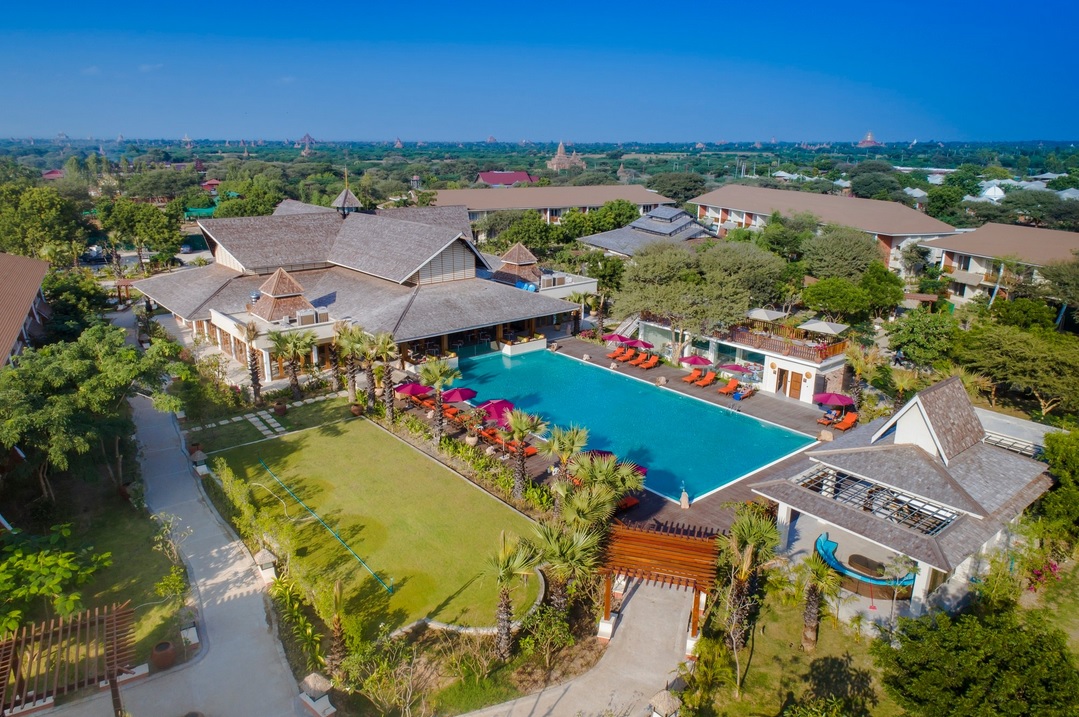
Sharing the resort completion photos and the state of the transplanted palms (Borassus flabellifer).
The palms were intentionally planted in straight rows to simulate the rows of palms that line the periphery of farm plots that grows peanuts and sesame seeds around this area.

Palms along the "row houses" looked like they are recovering well.

Ground shot of the above aerial shot.

Somewhere near the "row houses" as well.

Not showing much of the palm here, but rather the hot air balloons.

At another side of the development, where the main hall/reception building and swimming pool are located.

The transplanted palms lined one side of the swimming pool, and both side of the lawn.

Overlooking the ancient ruins of Bagan and hot air balloons.